


The 2019 Financial Soundness Indicators Compilation Guide (2019 Guide) includes new indicators to expand the coverage of the financial sector, including other financial intermediaries, money market funds, insurance corporations, pension funds, nonfinancial corporations, and households. In all, the 2019 Guide recommends the compilation of 50 FSIs—13 of them new. Additions such as new capital, liquidity and asset quality metrics, and concentration and distribution measures will serve to enhance the forward-looking aspect of FSIs and contribute to increase policy focus on stability of the financial system.
The Quarterly National Accounts Manual (the Manual) provides conceptual and practical guidance for compiling quarterly national accounts (QNA) statistics. The Manual offers a comprehensive review of data sources, statistical methods, and compilation techniques to derive official estimates of quarterly GDP. The new edition—which upgrades the first edition, published in 2001—improves and expands the previous content based on recent methodological advances, best country practices, and suggestions received from QNA compilers and experts.
This third edition of the Coordinated Portfolio Investment Survey Guide has been prepared to assist economies that participate or are preparing to participate in the Coordinated Portfolio Investment Survey (CPIS). It builds on and updates the second edition of the CPIS Guide (2002) to reflect the adoption of the Balance of Payments and International Investment Position Manual, sixth edition (BPM6) as the standard framework for compiling cross-border position statistics.
The IMF’s Fiscal Transparency Code is the international standard for disclosure of information about public finances and is the centerpiece of the global architecture on fiscal transparency. The Fiscal Transparency Handbook (2018) provides detailed guidance on the implementation of the new Fiscal Transparency Code, which was approved by the IMF Board in 2014. It explains why each principle of the Code is important and describes current trends in implementation of the principles, noting relevant international standards as well. Selected country examples are also provided.
This edition of Monetary and Financial Statistics Manual and Compilation Guide (Manual) updates and merges into one volume methodological and practical aspects of the compilation process of monetary statistics. The Manual is aimed at compilers and users of monetary data, offering guidance for the collection and analytical presentation of monetary statistics. The Manual includes standardized report forms, providing countries with a tool for compiling and reporting harmonized data for the central bank, other depository corporations, and other financial corporations.
Comparable and reliable data supporting coherent analytical and policy frameworks are essential elements to inform debates and guide policy related to the interrelationships between the economy and the environment. "The System of Environmental-Economic Accounting 2012—Central Framework" (SEEA Central Framework) is a statistical framework consisting of a comprehensive set of tables and accounts, which guides the compilation of consistent and comparable statistics and indicators for policymaking, analysis and research. It has been produced and is released under the auspices of the United Nations, the European Commission, the Food and Agriculture Organization of the United Nations, the Organisation for Economic Co-operation and Development, the International Monetary Fund, and the World Bank Group. The SEEA-Central Framework reflects the evolving needs of its users, new developments in environmental economic accounting and advances in methodological research.
This Coordinated Direct Investment Survey Guide (Guide) has been prepared to assist economies in participating in the Coordinated Direct Investment Survey (CDIS). The CDIS is being conducted under the auspices of the Statistics Department of the IMF across a wide range of economies. The survey is conducted simultaneously by all participating economies; uses consistent definitions; and encourages best practices in collecting, compiling, and disseminating data on direct investment positions. The CDIS is thus an important tool in capturing world totals and the geographic distribution of direct investment positions, thereby contributing to important new understandings of the extent of globalization, and improving the overall quality of direct investment data worldwide. As of the writing of this updated Guide, more than 100 economies participate in the CDIS.
The Revised Guidelines for Public Debt Management have been developed as part of a broader work program undertaken by the IMF and the World Bank to strengthen the international financial architecture, promote policies and practices that contribute to financial stability and transparency, and reduce countries external vulnerabilities.
The 2007–09 international financial crisis underscored the importance of reliable and timely statistics on the general government and public sectors. Government finance statistics are a basis for fiscal analysis and they play a vital role in developing and monitoring sound fiscal programs and in conducting surveillance of economic policies. The Government Finance Statistics Manual 2014 represents a major step forward in clarifying the standards for compiling and presenting fiscal statistics and strengthens the worldwide effort to improve public sector reporting and transparency.
This update of the guidelines published in 2001 sets forth the underlying framework for the Reserves Data Template and provides operational advice for its use. The updated version also includes three new appendices aimed at assisting member countries in reporting the required data.
The Balance of Payments and International Investment Position Manual 6: Compilation Guide is a companion document to the sixth edition of the Balance of Payments and International Investment Position Manual (BPM6). The purpose of the Guide is to show how the conceptual framework described in the BPM6 may be implemented in practice and to provide practical advice on source data and methodologies for compiling statistics on the balance of payments and the international investment position. The Guide is not intended to be a stand-alone manual, and readers should be familiar with the BPM6.
The External Debt Statistics: Guide for Compilers and Users (EDS Guide) contains updated global standards for the compilation, reporting, and analytical use of external debt statistics. The 2013 EDS Guide was prepared under the responsibility of the nine organizations in the Inter-Agency Task Force on Finance Statistics, in close consultation with national compilers of external debt, balance of payments, and international investment position statistics, and reflects the significant developments in international finance since the issuance of the 2003 EDS Guide. The new edition provides guidance on the concepts, definitions, and classifications of external debt data; the sources and techniques for compiling these data; and the analytical uses of these data.
This guide explains the nature and objectives of the General Data Dissemination System (GDDS), describes its operation, and provides practical guidance to IMF member countries on participation in the system. The GDDS provides members with a basic framework for a broader national statistical development strategy. It covers a set of statistics recognized to be essential for all countries for policymaking and analysis in an environment that increasingly requires relevant, comprehensive, accurate, and timely statistics available to the general public. The General Data Dissemination System: Guide for Participants and Users addresses the full range of issues critical for compiling and disseminating data and making explicit plans for improvement to align national procedures with best practices.
The global financial crisis of recent years and the associated large fiscal deficits and debt levels that have impacted many countries underscores the importance of reliable and timely government statistics and, more broadly, public sector debt as a critical element in countries fiscal and external sustainability. Public Sector Debt Statistics is the first international guide of its kind, and its primary objectives are to improve the quality and timeliness of key debt statistics and promote a convergence of recording practices to foster international comparability and as a reference for national compilers and users for compiling and disseminating these data. Like other statistical guides published by the IMF, this one was prepared in consultation with countries and international agencies, including the nine organizations of the Inter-Agency Task Force on Finance Statistics (TFFS). The guide's preparation was based on the broad range of experience of our institutions and benefitted from consultation with national compilers of government finance and public sector debt statistics. The guide's concepts are harmonized with those of the System of National Accounts (2008) and the Balance of Payments and International Investment Position Manual, Sixth Edition.
The Government Finance Statistics: Compilation Guide for Developing Countries represents a new approach by the IMF's Statistics Department (STA) to assist developing countries to compile government finance statistics (GFS) in accordance with the guidelines of the Government Finance Statistics Manual 2001 (GFSM 2001). The Guide specifically addresses issues relevant to developing countries. The Guide is based on our experience over many years of technical assistance and training to member countries, addressing common problems they face, and answering questions that often arise. Examples, figures, and tables are used to facilitate the reader's understanding of the topics discussed.

Handbook on Securities Statistics: Part 2: Debt Securities Holdings
The sixth edition of the Balance of Payments and International Investment Position Manual presents revised and updated standards for concepts, definitions, and classifications for international accounts statistics. These standards are used globally to compile comprehensive and comparable data. The sixth edition is the latest in a series that the IMF began in 1948. It is the result of widespread consultation and provides elaboration and clarification requested by users. In addition, it focuses on developments such as globalization, financial market innovation, and increasing interest in balance sheet analysis.
A joint production by six international organizations, this manual explores the conceptual and theoretical issues that national statistical offices should consider in the daily compilation of export and import price indices. Intended for use by both developed and developing countries, it replaces guidance from the United Nations that is now more than a quarter-century old and thus badly outdated. The chapters cover many topics; they elaborate on the different practices currently in use, propose alternatives whenever possible, and discuss the advantages and disadvantages of each alternative. Given its comprehensive nature, the manual is expected to satisfy the needs of many users in addition to national statistical offices and international organizations, particularly businesses, policymakers, and researchers.
Several high-level international groups urged development of methodological standards for securities statistics. In response, the Bank for International Settlements (BIS), the European Central Bank (ECB), and the International Monetary Fund (IMF) jointly developed the Handbook on Securities Statistics. The Handbook is the first publication that deals exclusively with the conceptual framework for the compilation and presentation of relevant, coherent, and internationally comparable securities statistics. Part I of the Handbook covers debt securities issues. Other parts are under development and cover issues of other types of securities and securities holdings.

The Manual on Fiscal Transparency provides an authoritative account and explanation of the revised IMF Code of Good Practices on Fiscal Transparency (the Code). It expands and updates the 2001 edition of the Manual, which has been used by countries undertaking assessments of the transparency of their fiscal management practices (including so-called fiscal ROSCs), legislatures, civil society organizations, economists, and financial analysts. Numerous new examples of implementation of the Code by countries in all regions of the world and at different levels of development are included. The Manual, which reflects a public comment process, is also supplemented by the revised Guide on Resource Revenue Transparency. It identifies numerous benefits from fiscal transparency, including providing citizens with information to hold governments accountable for their policy choices, informing and improving the quality of economic policy decisions, highlighting potential risks to the fiscal outlook, and easing a country’s access to international capital markets.

The Guide on Resource Revenue Transparency applies the principles of the revised IMF Code of Good Practices on Fiscal Transparency (‘the Code’) to the unique set of transparency problems faced by countries that derive a significant share of their revenues from natural resources and need to address complex and volatile transaction flows. The Guide identifies and explains generally recognized good or best practices for transparency of resource revenue management. It supplements the IMF Manual on Fiscal Transparency. The Guide has been revised to reflect the new Code and to provide more recent examples of good practice by individual countries. It is designed to give a framework for assessing resource-specific issues within broader fiscal transparency assessments (including so-called ‘fiscal ROSCs’). The Guide has been used by the governments and legislatures of resource-rich countries, civil societies, providers of technical support, and interested academics and observers.
The IMF's work on data dissemination standards consists of two tiers: the General Data Dissemination System (GDDS), which applies to all IMF member countries, and the Special Data Dissemination Standard (SDDS), for those members having or seeking access to international capital markets. The GDDS framework provide governments with guidance on the overall development of the macroeconomic, financial, and sociodemographic data that are essential for policymaking and analysis in an environment that increasingly requires relevant, comprehensive, and accurate statistical data. This Guide explains the nature, objectives, and operation of the GDDS; the data dimensions it covers; and how countries participate. It provides national statistical authorities with a management tool and a framework to foster sound statistical methodology, professional data compilation, and data dissemination. The Guide supersedes the version updated in March 2002 and incorporates the UN Millennium Development Goals (MDGs) as specific elements of the GDDS sociodemographic component, which was articulated with the collaboration of the World Bank.
The Handbook presents an overall analytical framework for assessing financial system stability and developmental needs, providing broad guidance on approaches, methodologies, and techniques of assessing financial systems. Although the Handbook draws substantially on World Bank and IMF experience with the Financial Sector Assessment Program (FSAP) and from the broader policy and operational work in both institutions, it is designed for generic use in financial sector assessments, whether conducted by country authorities themselves, or by World Bank and IMF teams.
The consumer price index (CPI) measures the rate at which the prices of consumer goods and services are changing over time. It is a key statistic for economic and social policymaking and has substantial and wide-ranging implications for governments, businesses, and households. This important and comprehensive Manual provides guidelines for statistical offices and other agencies responsible for constructing CPIs, and explains in-depth the methods that are used to calculate a CPI. It also examines the underlying economic and statistical concepts and principles needed for making choices in efficient and cost-effective ways, and for appreciating the full implications of those choices.

This Guide provides clear, up-to-date guidance on the concepts, definitions, and classifications of the gross external debt of the public and private sectors, and on the sources, compilation techniques, and analytical uses of these data. The Guide supersedes the previous international guidance on external debt statistics available in External Debt: Definition, Statistical Coverage, and Methodology (known as the Gray Book), 1988. The Guides conceptual framework derives from the System of National Accounts 1993 and the fifth edition of the IMFs Balance of Payments Manual(1993). Preparation of the Guide was undertaken by an Inter-Agency Task Force on Finance Statistics, chaired by the IMF and involving representatives from the BIS, the Commonwealth Secretariat, the European Central Bank, Eurostat, the OECD, the Paris Club Secretariat, UNCTAD, and the World Bank.
The Manual sets out an internationally agreed framework for the compilation and reporting of statistics on international trade in services in the broad sense. It addresses the growing need, including in international trade negotiations and agreements, for more detailed, comparable, and comprehensive statistics on this type of trade in its various forms. The recommendations will enable countries to progressively expand and structure the information they compile in an internationally comparable way. The Manual conforms with and explicitly relates to the System of National Accounts 1993 and the fifth edition of the IMF's Balance of Payments Manual. It is published jointly by the United Nations, European Union, IMF, OECD, UNCTAD, and World Trade Organization.

This paper reviews the coordinated portfolio investment survey (CPIS) guide. The objectives of CPIS are to collect comprehensive information, with geographical detail on the country of residence of the issuer, on the stock of cross-border equities, long-term bonds and notes, and short-term debt instruments for use in the compilation or improvement of international investment position statistics on portfolio investment capital. This paper discusses the scope and modalities of the CPIS. It also presents key findings of the 1997 CPIS and 2001 CPIS.
This handbook is a comprehensive and authoritative reference for both senior policymakers—those responsible for the development of government bond markets in their own countries—and all individuals responsible for guiding the market development process at the operational level—those who have a substantial need to understand the policy issues involved.

This Manual offers guidelines for the presentation of monetary and financial statistics. It provides a set of tools for identifying, classifying, and recording stocks and flows of financial assets and liabilities, describes the standard, analytically oriented frame works in which the statistics may be presented, and identifies a set of analytically useful aggregates within those frameworks. The concepts and principles set out in the Manual are harmonized with those of the System of National Accounts 1993.

In the late 1990s, international statistical experts confirmed that financial derivatives should be treated as financial assets and that transactions in financial derivatives should be reported as separate transactions rather than as integral parts of the values of underlying transactions or of financial assets to which some derivatives are linked as hedges. Therefore, to parallel revisions made to the System of National Accounts (1993), an addendum and amendments to the fifth edition (1993) of the Balance of Payments Manual (BPM5) were prepared and published, in early 2000, as a supplement entitled Financial Derivatives. This supplement comprises two parts. Part I contains a new chapter in which the features of financial derivatives and treatments appropriate for specific derivatives were described. Part II consists of modifications to those portions of the BPM5 that pertain to financial derivatives. The revisions are shown by means of shading and strikeout. Financial Derivatives is an essential component of the BPM5.
This Manual, addressed mainly to new staff members in the area and functional departments of the IMF, presents different ways to tackle specific problems that desk economists encounter in analyzing country data. This guide presents an approach to analyzing financial developments in a country and to evaluating the quality of data at the disposal of the staff.
New Releases
The paper provides an overview on development of digital money and payment systems in Pacific Island Countries, assessing potential benefits and risks, focusing on how they harness digital technology to enhance financial inclusion and payment efficiency while minimizing risks.
Global Economy
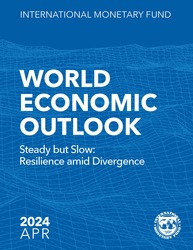
The latest World Economic Outlook reports economic activity was surprisingly resilient through the global disinflation of 2022–23, despite significant central bank interest rate hikes to restore price stability.
Emerging Markets
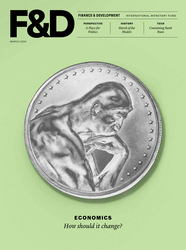
This issue of F&D takes a fresh look at the discipline of economics. We invited prominent economists with different perspectives to tell us how the profession can become better at answering 21st century challenges.
Copyright © 2010 - 2024
Powered by:
AIDC
